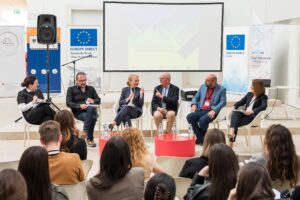
The conference “A Decade of Challenges and Achievements of the European Union (2013–Present)” was held on April 21, 2026, in Zadar, Croatia, organized by Europe House Slavonski Brod and Europe Direct Slavonski Brod, with the support of the Representation of the European Commission in Croatia and partner Europe Direct centres Zadar and Primorje-Gorski Kotar County.
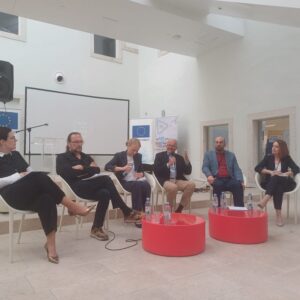 The event was implemented within the framework of the CERV – Past2Future project and was fully aligned with its overarching vision of linking the European Union’s historical development with present-day civic engagement and future-oriented reflection.
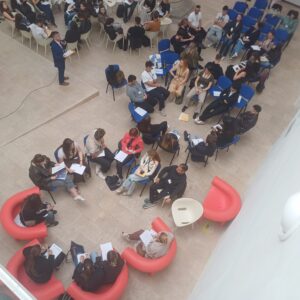
The conference was opened by Iva Perić, who highlighted that the current period requires reflection, adaptation and cooperation, emphasizing that over the past decade the European Union has faced numerous challenges — including economic and security issues, climate change and social transformations — while at the same time achieving significant progress, strengthening solidarity and reinforcing shared European values. She stressed that, at the local and regional level, the European Union is not an abstract concept, but a tangible reality reflected through projects, investments and opportunities that improve citizens’ quality of life.
The event gathered around 99 participants from nine countries — Albania, Bulgaria, the Czech Republic, Greece, Italy, Malta, Germany, Spain and Croatia — including representatives of EU institutions, academia, civil society organisations, the private sector and the general public, ensuring a diverse and multi-stakeholder exchange of perspectives.
The programme was structured through two panel discussions and interactive Europe Café sessions. The first panel, titled “A Decade of Croatia’s Membership in the European Union: Challenges, Opportunities and Achievements”, provided a comprehensive reflection on Croatia’s experience since joining the European Union in 2013. The panel brought together institutional, academic and business perspectives, highlighting both the benefits and challenges of EU membership, as well as Croatia’s evolving role within the Union. Participants included Zrinka Ujević, Head of the European Commission Representation in Croatia, Branko Baričević, former Head of the European Commission Representation in Croatia, Bruno Ćurko, Associate Professor, Sven Marcelić, Associate Professor, and Ana Zubčić from the business sector. The discussion was moderated by Marija Dušević. Panellists encouraged participants to remain curious, to make use of available opportunities, and not to fear crises, emphasizing that while crises are constant, so are human resilience and the ability to overcome them.
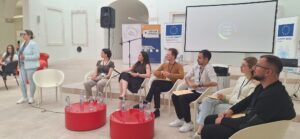
A central component of the conference consisted of the Europe Café sessions, organised as six thematic participatory workshops and moderated by Srđan Kerčević from Europe Direct Primorje-Gorski Kotar County. These sessions enabled participants to actively engage in discussions and co-create recommendations addressing key EU priorities, including trade and global positioning, mobility and demographic trends, artificial intelligence and the future of work, security and resilience, democracy and citizen participation, and enlargement and international partnerships. The working group methodology facilitated exchange of perspectives and collective knowledge production, ensuring that individual views were transformed into shared insights. Participants developed concrete and policy-relevant recommendations, including the need for more efficient EU decision-making processes, stronger investment in skills and innovation, improved access to mobility opportunities, enhanced transparency and citizen participation, and continued commitment to EU values and enlargement policies.
The results of the Europe Café sessions were presented during the final panel discussion, also moderated by Srđan Kerčević, where participants shared their conclusions and engaged in a broader reflection. This participatory approach ensured that participants’ voices were fully integrated into the outcomes of the event and reinforced the importance of inclusive dialogue and bottom-up contributions.
The final conclusions of the conference were presented by Maja Kuzmić.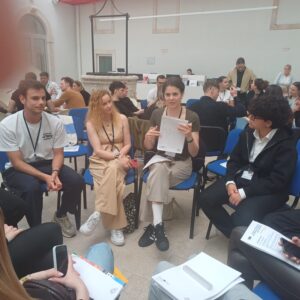
Following the formal programme, participants took part in an interactive activity titled Treasure History Hunting, which provided an opportunity for informal networking, intercultural exchange and learning about the cultural and historical heritage of the city of Zadar. This activity contributed to strengthening connections among participants and enhancing the overall experience of the event.
Overall, the conference successfully combined expert-led discussions with participatory methodologies, resulting in a highly engaging and well-attended event. It contributed to increased awareness of the key challenges and achievements of the European Union over the past decade, strengthened dialogue between institutions and citizens, and promoted active participation. The event also supported transnational exchange and cooperation, in line with the objectives of the CERV – Past2Future project, and contributed to fostering active citizenship, democratic engagement and a shared understanding of the future of the European Union.
