
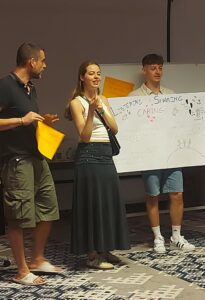
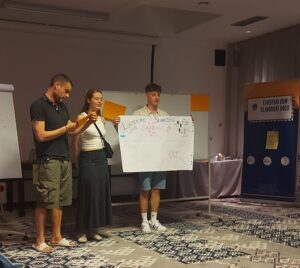
From 17 to 24 April 2026, the city of Zadar, Croatia, hosted the international training course CRWE, implemented within the framework of the Erasmus+ Programme. The activity brought together 27 youth workers, youth leaders, and representatives of nine partner organisations from different European countries, creating a dynamic environment for learning, cooperation, and intercultural exchange.
The training course was designed to strengthen the competences of youth professionals in addressing some of the most pressing challenges facing young people and democratic societies today, including nationalism, populism, xenophobia, radicalisation, misinformation, and hate speech. Through a carefully designed programme based on non-formal education and experiential learning methodologies, participants explored practical approaches for promoting democratic values, critical thinking, social inclusion, and active citizenship among young people.

During the eight-day programme, participants engaged in a wide range of interactive learning activities, including workshops, simulations, role-plays, group discussions, case study analyses, storytelling exercises, and collaborative problem-solving tasks. These activities provided opportunities to examine the factors that contribute to radicalisation and social division, while also developing tools and strategies for fostering resilience, dialogue, and positive social engagement within local communities.
A key focus of the training was the development of alternative narratives capable of countering harmful and divisive messages. Participants explored how young people can be empowered to critically assess information, recognize manipulation and propaganda techniques, and actively contribute to creating more inclusive and democratic societies. Special attention was also given to media literacy, fact-checking, and methods for responding to misinformation in both online and offline environments.
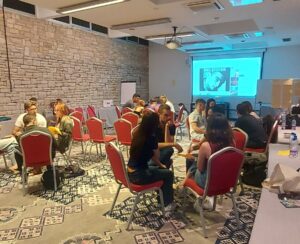
One of the greatest strengths of the training was the international and intercultural dimension of the learning process. Participants shared experiences from their own countries and organisations, discussed challenges faced by young people in different contexts, and exchanged examples of successful youth work practices. This peer-learning approach enriched the programme and strengthened cooperation among partner organisations.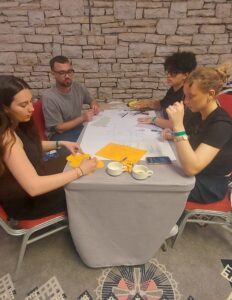
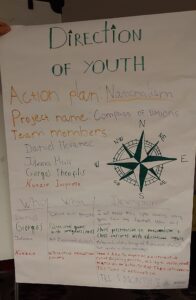
The practical component of the training enabled participants to apply newly acquired knowledge and skills through the development of awareness-raising campaigns, educational materials, workshop concepts, and local action plans. These outputs will be further implemented by the participating organisations, ensuring that the learning outcomes of the training continue to benefit young people at the local level long after the activity has ended.


Throughout the training, a strong emphasis was placed on creating a safe, inclusive, and supportive learning environment where participants felt comfortable discussing complex and sensitive topics. The collaborative atmosphere encouraged active participation, creativity, mutual respect, and meaningful intercultural dialogue, contributing significantly to the overall success of the activity.
The final evaluation demonstrated a high level of satisfaction among participants, who particularly appreciated the practical methodology, the relevance of the topics addressed, the quality of facilitation, and the opportunity to establish new international partnerships. Participants reported increased confidence in applying non-formal education methods, facilitating discussions on challenging social issues, and supporting young people in becoming active and responsible members of their communities.
The CRWE training course successfully achieved its objectives by strengthening the capacities of youth workers and youth leaders while fostering sustainable international cooperation among partner organisations. The activity represents an important contribution to the Erasmus+ Programme’s mission of empowering young people, promoting democratic participation, and building more resilient, inclusive, and cohesive societies across Europe.
The partnership would like to thank all participants, trainers, and partner organisations for their commitment, active involvement, and valuable contributions throughout the training course. We look forward to seeing the impact of the follow-up activities that will be implemented in the coming months across the partner countries.
Funded by the European Union. Views and opinions expressed are however those of the author(s) only and do not necessarily reflect those of the European Union or the National Agency. Neither the European Union nor the granting authority can be held responsible for them.